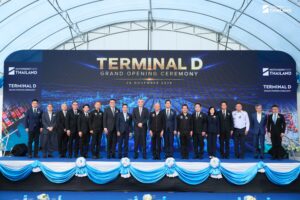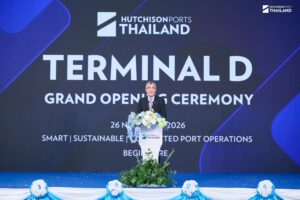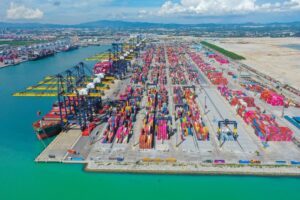
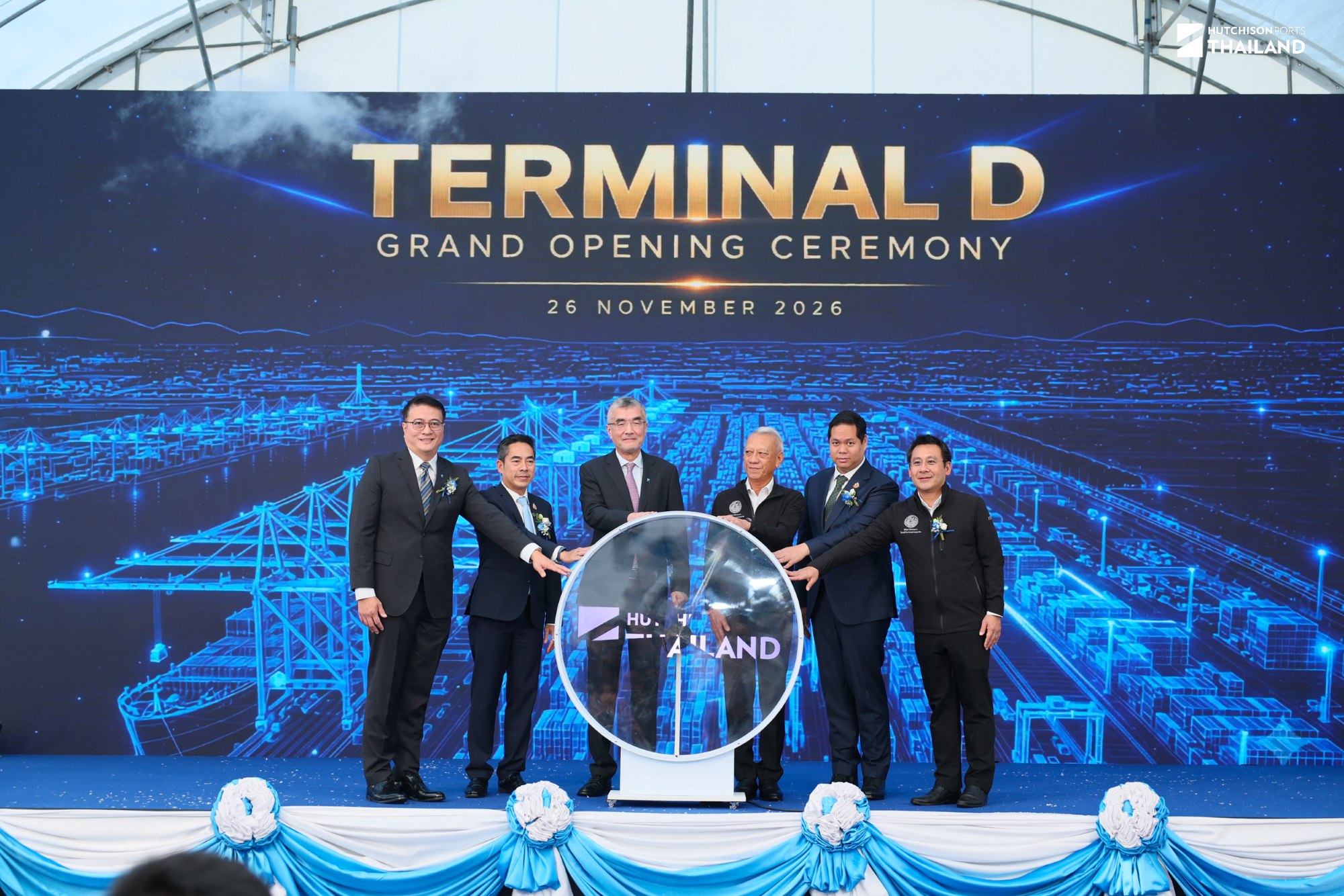
Bangkok, Thailand – 26 November 2026: Hutchison Ports Thailand (HPT) hosted an official ceremony to celebrate the completion of Terminal D at Laem Chabang Port. Completed in March 2026 and now operating at full capacity, the terminal adds 3.5 million TEUs of annual handling capacity and strengthens Thailand’s position as a key maritime gateway in Southeast Asia.
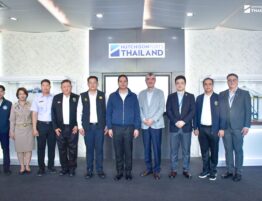
The ceremony was attended by Mr. Phipat Ratchakitprakarn, Deputy Prime Minister and Minister of Transport, together with senior government officials, commercial partners and industry stakeholders.
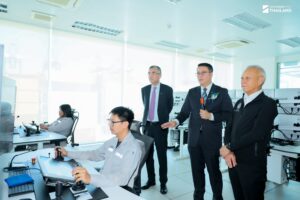
During the event, the Deputy Prime Minister visited Terminal D’s control room to observe HPT’s remote-controlled container handling operations. HPT pioneered the deployment of remote-controlled crane technology in Thailand and continues to advance automation and electric equipment across its operations.
Advanced Capacity and Technology
Covering approximately 770,000 square metres, Terminal D features a 1,700-metre quay, a depth alongside of 16 metres at mean sea level and 17 remote-controlled ship-to-shore cranes, enabling it to accommodate three Super Post-Panamax container vessels simultaneously.
The terminal is also equipped with 48 remote-controlled yard cranes, automated gates, and a fleet of autonomous and electric trucks supported by a battery-swapping station for continuous 24-hour operations.
Terminal D has already handled mega-vessels operated by leading shipping lines including Mediterranean Shipping Company (MSC), Ocean Network Express (ONE) and OOCL.
Supporting Thailand’s Trade Growth
Developed in alignment with Thailand’s Eastern Economic Corridor (EEC) initiative, Terminal D enhances Laem Chabang Port’s capacity to support growing international trade and larger vessel calls.
Its completion also coincides with HPT reaching 55 million TEUs in cumulative container throughput this year.
The terminal’s use of electric equipment supports HPT’s progress towards the Hutchison Ports Group’s target of achieving net-zero carbon emissions by 2050, while contributing to a more efficient and sustainable port logistics sector in Thailand.